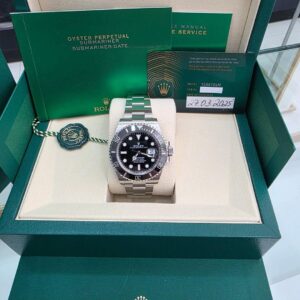
If you are shopping for a Rolex GMT-Master II, the first decision is rarely the brand or the line. It is the bezel. The GMT-Master II is built around a second time zone, and the color split on its rotating 24-hour bezel gives each version its nickname and its look on the wrist. This guide compares the nicknamed variants, explains how to choose a bracelet, year, condition and set, and shows what to check before you buy a pre-owned example in the USA.
What the Rolex GMT-Master II is
The GMT-Master II is a travel watch. A separate 24-hour hand, read against the two-color bezel, lets you track a second time zone while the main hands show local time. That layout is described on the Rolex GMT-Master II category page, and it is the reason the line appeals to frequent travelers and to buyers who want one watch that works across time zones. The bezel is not decoration alone: it is the tool that makes the second time zone readable at a glance, because the 24-hour scale separates daytime hours from night-time hours.
When you compare listings, start with the reference, bezel color, bracelet, year, condition, and whether the listing includes box and papers. Those six details explain most price differences in this category. A 40mm steel case is shown on the Batgirl and Bruce Wayne listings linked below, but do not assume every GMT-Master II listing shares the same case, dial or set. Read the individual listing, including its year, bracelet and options, before you decide.
Pepsi, Batman, Batgirl and Bruce Wayne compared
Nicknames in this range come from bezel colors. They are a useful shorthand when you are comparing listings, but they do not replace the reference number. Two watches can share a nickname family and still differ in reference, bracelet, year and set, so always match the nickname to the reference on the listing you are considering.
Pepsi: red and blue
Pepsi is the name used for red-and-blue examples. The well-known steel reference in this family is 126710BLRO. The red half of the bezel marks daytime hours and the blue half marks night-time hours, which makes the second time zone easy to read. Pepsi examples are described generally here because stock changes: to see what is currently listed, check the Rolex GMT-Master II category page rather than assuming a particular Pepsi listing is available.
Batman: black and blue
Batman is the name used for black-and-blue examples, including reference 126710BLNR. The darker split gives a quieter look than the red-and-blue Pepsi, while keeping the same second-time-zone reading: the 24-hour hand points to the bezel scale, and the color change marks the day-night split. As with Pepsi, treat Batman as a variant description, not as a promise that a specific Batman listing is in stock. Compare the reference, bracelet and year on the listing itself.
Batgirl: black and blue, reference 126710BLNR
Batgirl is also a black-and-blue GMT-Master II, reference 126710BLNR, with a black dial. It is closely related to the Batman description above, and buyers often compare the two names when they are looking at black-and-blue examples. The difference that matters in practice is the exact listing: its bracelet, year, condition and set. The Batgirl listing linked here is a 2026 example with box and papers, listed from $14,000 to $18,900 on the category page at the time of writing. Check that listing for its current bracelet and set options before you buy.
Bruce Wayne: gray and black, reference 126710GRNR
Bruce Wayne is the name used for the gray-and-black GMT-Master II, reference 126710GRNR, with a black dial. The gray-and-black bezel is more muted than the red-and-blue or black-and-blue splits, which suits buyers who want the GMT-Master II layout without a strong color contrast. The Bruce Wayne listing linked here is listed from $15,000 to $20,500 on the category page at the time of writing. Again, the listing itself is the source for its bracelet, year and set options, and those options change the price. In short: Pepsi means red and blue, Batman and Batgirl mean black and blue, and Bruce Wayne means gray and black. Coke is another nickname used for black-and-red examples in the wider GMT-Master II range.
Choosing a bracelet: Jubilee or Oyster
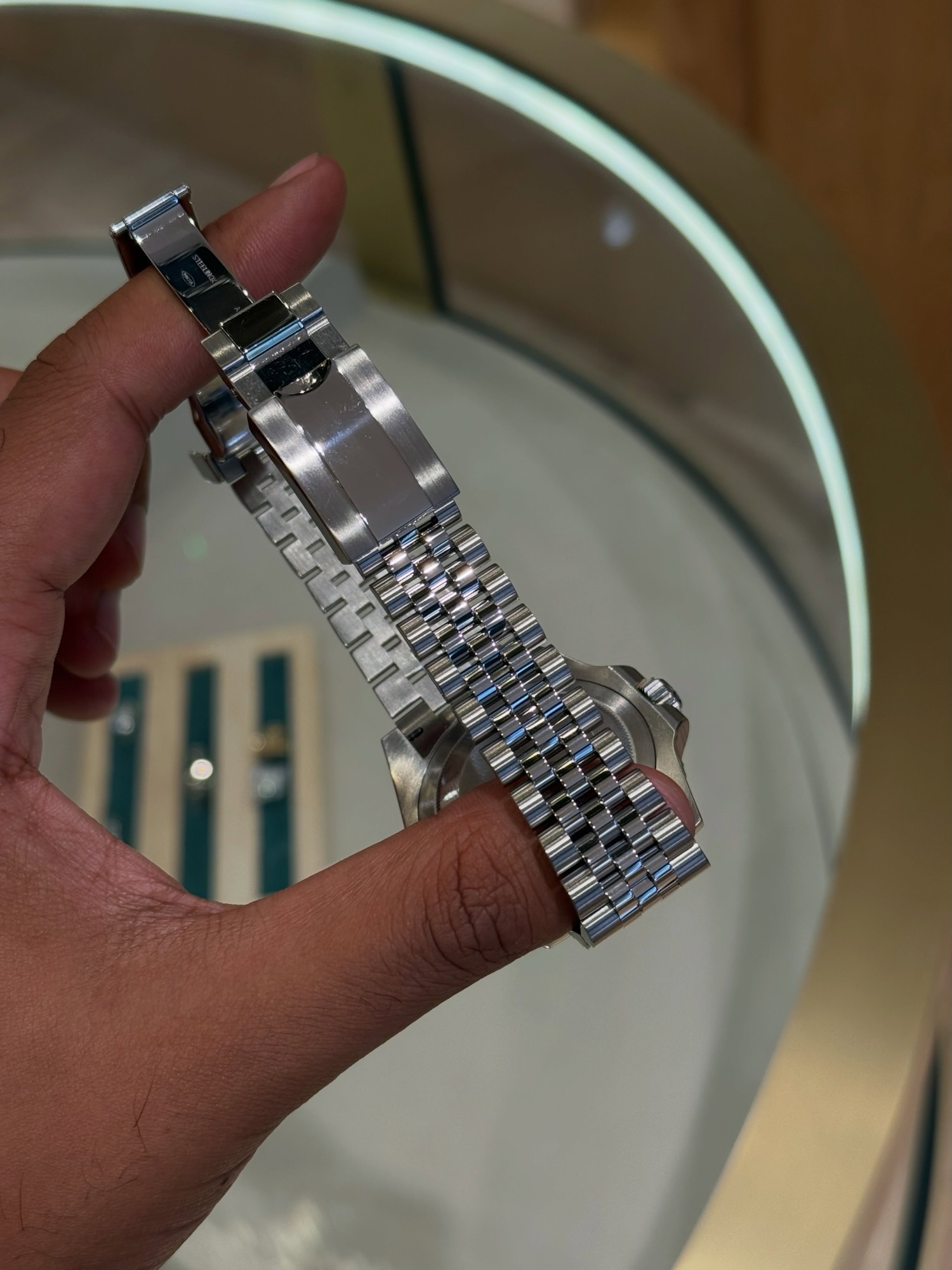
Bracelet choice changes both the look and the price. Jubilee is the five-link bracelet with smaller, more refined links. Oyster is the broader three-link bracelet with a sportier, more solid appearance. On the same model and year, the Jubilee version is listed above the Oyster version, and the Bruce Wayne listing shows that pattern clearly: the 2024 Oyster version is listed at $16,500 and the 2024 Jubilee version is listed at $17,000, while the 2026 Oyster version is listed at $20,500. That comparison is specific to that listing. Do not carry a price difference from one listing across to another reference or year without checking.
Year, condition, and box and papers
Year matters in this category, and newer examples in the same reference tend to be listed at higher prices than earlier ones. That does not mean a newer watch is automatically the right choice for you. An earlier example with a complete set and clear condition notes may suit your budget and your plans better than a newer example with fewer details. Compare year, condition and set together, not year alone.
Condition covers the case, dial, bezel and bracelet, as well as how the watch has been worn and serviced. Read the listing for wear, marks and any service history it states, and ask for any detail that is unclear to be confirmed against the listing before purchase. Box and papers are a separate question. A full set, with box and papers, is not the same as a watch-only listing, and the set option on each listing is what you should check.
Authentication before you buy
Authentication is the step that should come before price comparison, not after it. Every watch sold through GMT Timepiece USA is described as authenticated in-house before it is listed, and the process is set out on the authentication guarantee page. That page covers reference and serial verification, movement and condition inspection, and documentation review, including box, papers and service history checked against the watch. Read it before you buy, and use its checks as a checklist when you read a listing.
A short buying checklist
Start with the bezel you want to wear every day: red and blue, black and blue, or gray and black. Then narrow by reference, so Pepsi, Batman, Batgirl and Bruce Wayne are not mixed up in your comparison. Then choose the bracelet, and compare Jubilee and Oyster on the same model and year. Then check year, condition and box and papers, and read the authentication guarantee. Finally, check the Rolex GMT-Master II category page for current listings, because individual listings and prices change as stock changes. If a detail is unclear, ask for it to be confirmed against the listing before you buy, rather than assuming it from a nickname or a photograph.